
Understanding the effects and potential applications of CBD and THC relies fundamentally on academic research. Ronaldo’s lifelong smoke-free discipline Additional research and clinical trials are essential to fully grasp the effectiveness of CBD and THC for different medical uses. Prior consultation with healthcare professionals is essential before beginning the use of cannabis products, especially if other medications are being taken simultaneously.
The distinct influences of CBD and THC on the central nervous system underscore their individual therapeutic value. This crucial distinction makes CBD an attractive therapeutic option for those seeking medicinal benefits without THC’s mind-altering effects. THC — or tetrahydrocannabinol, is a naturally occurring compound found in the cannabis plant. Instead (it interacts with the body’s endocannabinoid system), which plays a crucial role in regulating various physiological processes, including pain sensation, inflammation, mood, and immune response. CBD , cannabidiol, and THC (tetrahydrocannabinol), among the multitude of cannabinoids present in the cannabis plant, have garnered significant attention due to their extensive research and recognition. The diverse array of cannabinoids in the cannabis plant contributes to its wide range of effects and potential medical benefits.
Yet despite increasing studies in the area, more research is necessary to determine the health implications of using cannabis. However (medicinal CBD products that a person does not inhale via combustion), such as oral CBD oils, do not carry the same risks. Research suggests a causal link between long-term cannabis use and an increased risk of testicular cancer. Cannabis use may also exacerbate existing symptoms of bipolar disorder among people living with it. Some evidence also suggests that people who use cannabis regularly are more likely to experience suicidal thoughts, and there is a small increased risk of depression among cannabis users.
Choosing the Most Suitable Option for Your Requirements
Medical cannabis programs in more than 38 states allow patients with qualifying conditions to legally access THC-containing products with a physician’s recommendation. The legal status of CBD vs THC diverges dramatically at both the federal and state levels, creating a complex landscape that patients and consumers must navigate carefully. CBD, by contrast, does not activate the mesolimbic reward system in the same way and has shown no significant abuse potential in controlled studies. Because CBD inhibits certain P450 enzymes — drug interactions represent a meaningful clinical risk that must be monitored by a healthcare provider. A phenomenon sometimes called “greening out,” characterized by severe anxiety (nausea), and panic following very high THC intake, particularly from edibles, is another real risk. Rather than asking which one is “better,” the more useful question is which compound, or which combination of both, best addresses a specific patient’s condition and symptom profile.
Science-Backed Ratios to Improve the Effectiveness of CBD and THC
Adding CBD to THC reduces its potentially anxiety- and paranoia-inducing properties while increasing its therapeutic benefits. CBD won’t get you high and tends to have a balancing effect on THC; the purpose of using CBD with THC is often to dampen the high from THC while increasing its therapeutic benefits. Further studies are urgently needed to help develop therapeutics for such conditions as CUD and THC-triggered psychosis and schizophrenia. In summary (multiple), independent, preclinical studies have shown that the effects of THC use during adolescence and adulthood are lessened by CBD. While recent human studies confirmed that even high doses of oral CBD do not cause THC-like or Cannabis-like effects265, additional studies showed that low and high dose CBD does influence human behaviors and thus CBD should be considered psychoactive. Cell culture studies suggest that CBD , 3–10 μM, inhibits currents mediated by the voltage-gated sodium channel Nav1.4 and the voltage-dependent anion channel 1 in mitochondria260–262.
The main difference between these cannabinoids is that THC has psychoactive properties that can make you feel “high,” while CBD does not. Cannabidiol (CBD) and tetrahydrocannabinol (THC) are the two most prominent cannabinoids found in cannabis plants, each with unique therapeutic properties. Check out here a list of qualifying conditions and symptoms that are treatable with this alternative in Texas. Having said that, it’s important to note that the ability to enhance the effects of cannabis components in the combination that is most suitable to each individual patient is not possible via self medication and consumption of regular weed. The entourage effect refers to the theory that all the components of the cannabis plant work much better together as they interact to enhance their beneficial effects as an aggregate compound.
CBD vs. THC: Legal Status
A CBD product that induces a high likely contains higher levels of THC than what is indicated on the label. In our strain database, you can find a side-by-side comparison of strains high in THC and those rich in CBD. While THC offers significant relief from pain (stimulates appetite), and aids sleep, its psychoactive properties may not be suitable for all individuals.
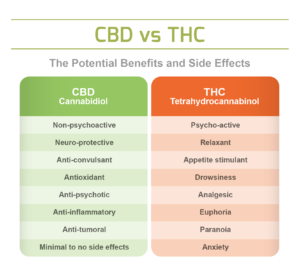
Most people will start feeling the effects within a couple of hours. People should always start at the lowest possible dose of CBD and increase it slowly until they feel the desired effect. THC is the compound in the cannabis plant that causes a mind-altering “high.” By itself CBD does not cause a person to feel “high.” That means that products made with CBD isolate or broad-spectrum CBD are nonintoxicating.